
What Does Job-Ready Mean in Life Sciences? | CASTL
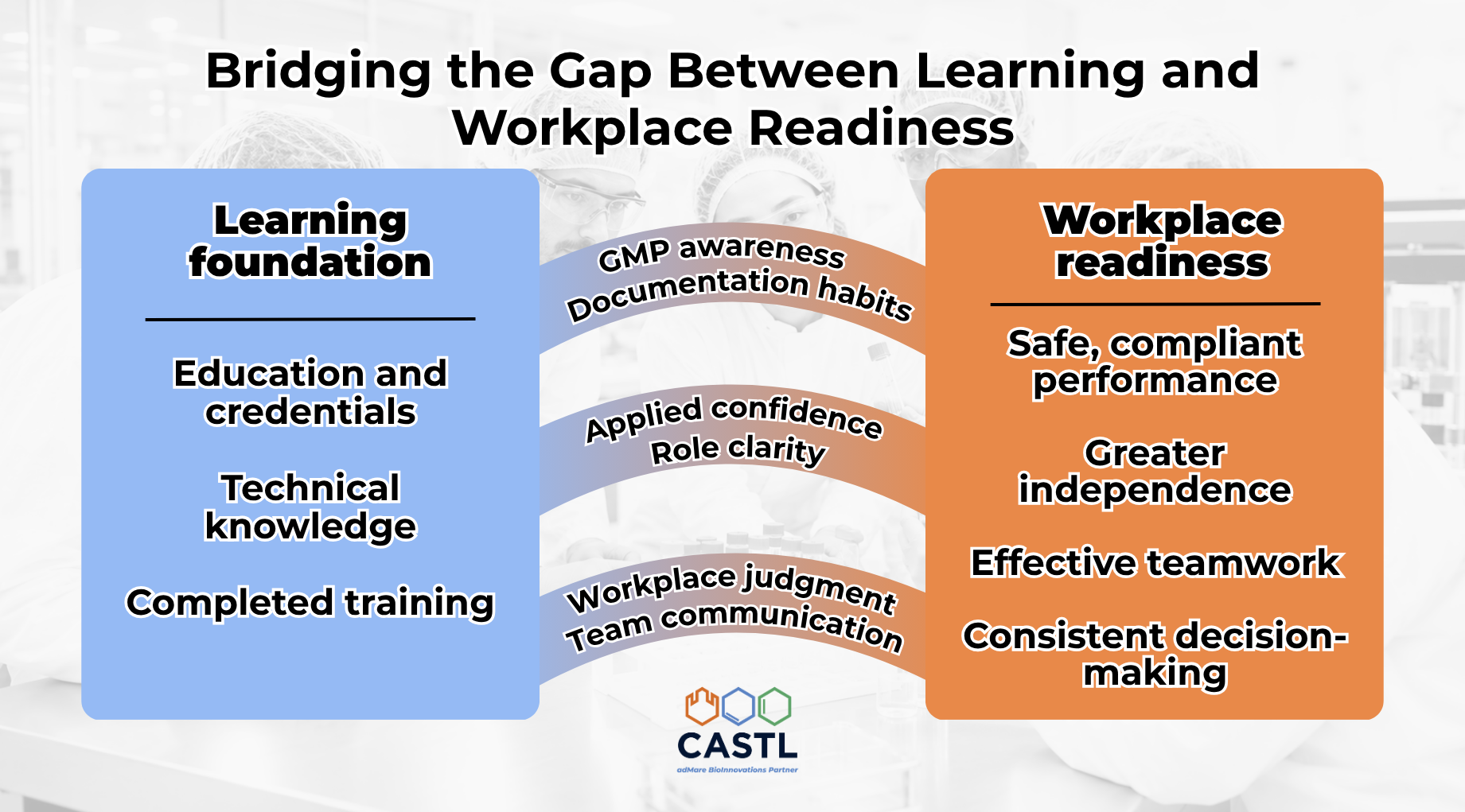
A credential does not always mean someone is ready for the realities of life sciences work.
Education, training, and technical knowledge provide an important foundation. But in regulated life sciences environments, being job-ready means more than completing a course, earning a certificate, or learning the theory.
It means being prepared to apply knowledge in a workplace where quality, documentation, safety, compliance, teamwork, and judgment are part of the day-to-day reality.
For employers, that difference matters.
What Skills Make Someone Job Ready in Life Sciences
Technical knowledge is one part of workplace readiness, but employees also need the behaviours, awareness, and practical skills to contribute safely and effectively.
In regulated life sciences environments, job readiness can include:
- Good Manufacturing Practice awareness: Understanding why GMP requirements matter and how they connect to day-to-day behaviours, decisions, and responsibilities.
- Documentation habits: Recognizing that documentation is essential to quality, traceability, and compliance.
- Applied confidence: Using knowledge in practical situations rather than only recalling information learned during training.
- Role clarity: Understanding what a role requires, where responsibilities begin and end, and how the work connects to the broader operation.
- Workplace judgment: Recognizing when to pause, ask a question, escalate a concern, or seek support.
- Team communication: Sharing information clearly, listening carefully, and working effectively across teams, shifts, or departments.
Together, these capabilities help employees move from understanding a concept to applying it effectively in the workplace.
Why There Is a Gap Between Training and Workplace Readiness
New employees in life sciences often enter complex, regulated, and highly process-driven environments. They may understand the science, have relevant education, and have completed training, but still need to learn how their knowledge translates into real workplace situations.
They may need to learn:
- what good documentation looks like in practice;
- why GMP matters when making everyday decisions;
- how to follow procedures consistently under workplace pressures;
- when an issue should be escalated;
- how concerns should be communicated; and
- what quality and consistency look like in day-to-day work.
These are not always skills people learn through theory alone.
They are built through training that connects knowledge with applied practice, clear expectations, workplace context, feedback, and opportunities to build confidence.
An employee can complete onboarding or technical training and still require support before working independently—but a gap can remain between what someone has learned and what they are expected to do.
How Employers Can Assess Job Readiness
Course completion tells us that someone participated in learning.
It does not always tell us what they can do, how confidently they can do it, or how ready they are to apply that learning in context.
A good approach is to make skills and expectations visible. Employers can ask:
- What skills has this person developed?
- What level of proficiency does the role require?
- What can the person perform independently?
- Where do they still need guidance or coaching?
- Can they explain why procedures and requirements matter?
- Do they recognize when to ask questions or escalate concerns?
- Are they demonstrating the workplace behaviours expected in a regulated environment?
When skills and expectations are clear, employers can onboard more effectively. Managers can support development more consistently. Employees can understand what they are building toward.
This is especially important in life sciences, where readiness is not only about getting the job done. It is about doing the work in a way that supports quality, safety, compliance, and continuous improvement.
How Employer-Informed Training Supports Workforce Readiness
Job-ready talent is easier to develop when training reflects workplace realities. That means understanding what employers need, what roles require, where new employees commonly struggle, and what skills matter most for performance and growth.
Employer-informed training creates stronger learning pathways by connecting learning outcomes to industry expectations.
For employers, this can support:
- clearer role expectations;
- more consistent onboarding;
- stronger alignment between training and performance; and
- greater visibility into employee development.
It also helps learners understand why the training matters.
How Organizations Can Measure Workforce Readiness
Job readiness doesn't happen simply because training has been delivered. It develops through a combination of knowledge, applied practice, coaching, feedback, and clear expectations.
Organizations can make that development more visible through:
- competency frameworks;
- skills mapping;
- structured onboarding pathways; and
- practical assessments.
These tools help organizations move beyond asking whether a person has completed training. Instead, they can assess whether the person can apply what they have learned at the level the role requires.
This shift connects learning more directly to performance and gives employees, managers, and learning teams a clearer picture of development over time.
Building Job-Ready Life Sciences Teams
Life sciences organizations need people who are not only knowledgeable, but prepared to work in environments where quality, consistency, documentation, and judgment matter every day.
That kind of readiness does not happen by accident.
It is built through training that reflects employer needs, makes skills visible, supports applied learning, and connects directly to workplace expectations.
CASTL helps bridge the gap between learning and workplace readiness through employer-informed training, applied skills, and measurable competencies.
Through Learning and Development Support Services, CASTL helps life sciences organizations identify skill gaps, strengthen onboarding, improve knowledge transfer, and build practical workforce development systems aligned with long-term growth.
Looking to strengthen workforce readiness within your organization?
Connect with Lee McKinley to discuss how CASTL can help align learning, skills, and workplace expectations.