


Making Capability Culture Stick: From Intent to a Proactive Learning System
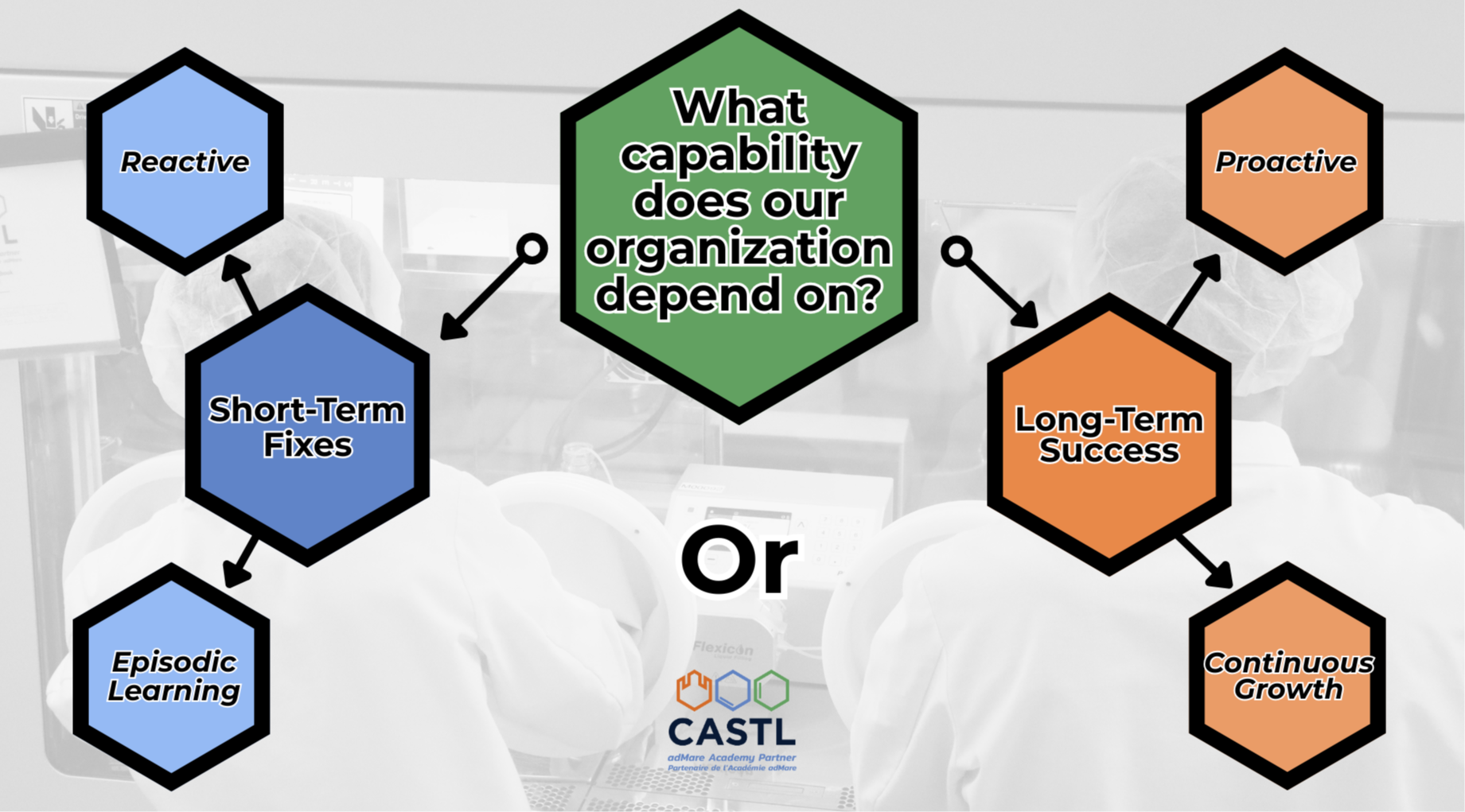
Most organizations don’t lack good intentions when it comes to developing their people.
Capability is promised.
Learning is praised.
Training is delivered.
But intent alone doesn’t build capability — and it certainly doesn’t create culture.
What makes the difference is whether learning is treated as a program… or as a system. And in an environment shaped by AI, automation, and constant change, that distinction is becoming impossible to ignore.
From Training Programs to Learning Systems
Training remains an important part of the picture. But on its own, it can’t carry the weight of modern workforce demands.
What’s needed instead is a learning system — one that intentionally connects:
- skills visibility
- practice and application
- feedback and reinforcement
- leadership expectations
In effective learning systems, capability isn’t built in isolation. It’s reinforced continuously through the way work is designed and supported.
This is how learning becomes continuous, not occasional.
What This Looks Like in Practice
I’ve seen this play out inside organizations with strong intentions and no shortage of training. Courses were well designed. Attendance was tracked. Completion rates looked healthy.
And yet, the same issues kept resurfacing.
When we looked closer, the problem wasn’t effort — it was design. Learning lived in discrete moments, disconnected from the realities of work. Skills were introduced, but rarely practiced. Expectations were implied, not reinforced. Leaders assumed competence because training had been “done.”
This is the pattern I’ve written about before: when learning is treated as an event, capability is left to chance.
The shift happened when the conversation moved away from delivery and toward dependence. Instead of asking what training needed to be rolled out, leaders started asking where performance actually reflected risk — and what people needed to be able to do consistently when conditions changed.
That reframing changed how learning showed up. Practice was built into the flow of work. Managers were given simple ways to reinforce expectations in real time. Capability became visible — not because more training was added, but because learning was finally treated as a system.
That’s when improvement started to stick. Not because people were more motivated, but because the environment stopped relying on hope and started reinforcing competence by design.
Top-Down Commitment Is Non-Negotiable
Capability culture can’t be built from the bottom up.
When development is seen as an L&D initiative rather than an organizational priority, it competes — and usually loses — to short-term pressures.
For capability to take hold:
- leaders must show that competence is the expectation, not just output
- managers must be supported to reinforce learning in real time
- capability conversations must be normal, expected, and visible
When focus comes from the top, capability stops being optional. It becomes part of how success is defined.
Practice Turns Strategy into Reality
Capability isn’t built through awareness.
It’s built through practice.
Learning systems that work create structured opportunities for people to apply skills, refine judgment, and build confidence — safely and repeatedly. This is where experiential learning, simulation, and supported on-the-job practice play a critical role.
Practice builds adaptability.
Adaptability enables teams to keep pace as AI and automation reshape work.
Proactive Capability Beats Reactive Training
The organizations best positioned for the future aren’t waiting for gaps to appear. They’re building capability ahead of need.
They invest in:
- skills mapping before shortages emerge
- practice before performance is at risk
- learning systems that evolve alongside the work
This proactive approach reduces risk, strengthens confidence, and creates momentum — not just compliance.
Building What Lasts
Making capability culture stick isn’t about motivation or messaging. It’s about design.
When learning is treated as a system, when leadership reinforces it, and when capability is seen as a strategic asset, organizations stop chasing readiness — they sustain it.
Because in a world that keeps changing, competence isn’t something you react to.
It’s something you build — deliberately, consistently, and ahead of the curve.
If you’re ready to move beyond quick fixes and integrate capability culture from the top down, we’d be glad to explore what that could look like for your team.
Contact lee@castlcanada.ca to explore what capability culture looks like for your team.