

Your Training Isn’t Broken. Your Capability Culture Is.
Why Workforce Readiness Can’t Live in Learning & Development Alone
Many organizations believe they’ve done what’s required when it comes to training.
The courses are built. Attendance is tracked. The LMS is full. Audit boxes are checked.
And yet, the same issues keep surfacing: inconsistent performance, slow onboarding, repeated errors, and teams who technically “know” what to do but don’t always feel confident doing it.
The gap isn’t effort.
It’s where learning lives.
Training events don’t automatically translate into capability. And in today’s environment — shaped by rapid technological change, AI, and increasing regulatory pressure — that distinction matters more than ever.
Why Traditional Models Are Starting to Crack
For years, L&D has operated alongside the work, not within it — designed away from the floor, delivered in cycles, and measured by completion rather than confidence.
AI is now exposing the limits of that model.
As tasks evolve faster than curricula can be updated and workflows shift in real time, static training approaches can’t keep pace. Job descriptions lag. Courses age quickly. Capability gaps appear where compliance once looked sufficient.
This isn’t a failure of training.
It’s a signal that the system around it needs to change.
Training still matters — especially in regulated environments — but on its own, it’s no longer enough. What’s needed now is a learning system that keeps capability moving as work itself evolves.
That shift starts with culture.
Capability is built when training is supported by practice, feedback, and real-world application. Without those elements, even well-designed programs struggle to translate into confident performance.
What a Capability Culture Actually Looks Like
A capability culture doesn’t mean constant training or endless upskilling initiatives. It means development is embedded into how work gets done.
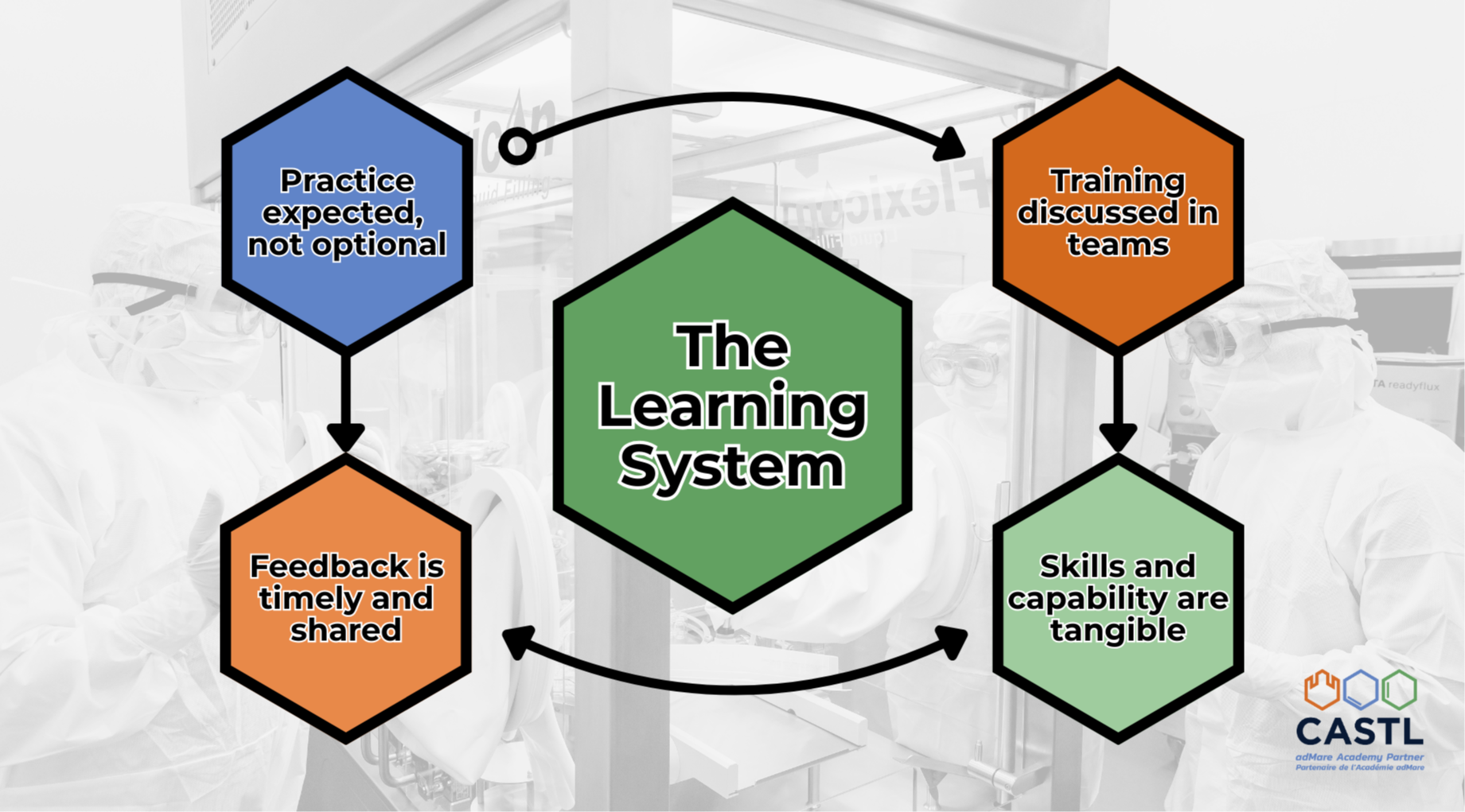
In organizations with strong capability cultures:
- Learning is discussed openly in team conversations
- Practice is expected, not optional
- Feedback is timely and constructive
- Skills and expectations are visible
- Development feels relevant, not imposed
Many teams don’t struggle because they lack knowledge, but because they haven’t had enough opportunity to practise under realistic conditions.
Capability isn’t something people “attend.”
It’s something they build, incrementally, through experience.
This shift matters because capability is dynamic. As tools, processes, and technologies evolve, so must the skills that support them. A culture that normalizes learning makes that adaptation possible.
The Real Shift: From Ownership to Enablement
One of the biggest misconceptions about capability building is that it belongs to L&D alone.
In reality, sustainable capability emerges when responsibility is shared:
- Leaders set the expectation that competence matters
- Managers create space for practice and reflection
- Subject matter experts share expertise with structure and support
- L&D designs the systems, frameworks, and environments that make learning stick
In an AI-driven landscape, this shift is essential. When tools change faster than training cycles, the ability to learn, adapt, and apply knowledge becomes more valuable than mastery of any single system.
Capability culture enables organizations to absorb change rather than resist it.
Why Hands-On Learning Makes Culture Stick
Culture isn’t built through policy statements or strategy decks. It’s built through experience.
Hands-on, experiential learning — whether through simulation, practice environments, or structured on-the-job application — plays a critical role in reinforcing capability culture. It gives people space to try, refine, and gain confidence without fear of high-stakes consequences.
Confidence doesn’t come from being told you’re competent.
It comes from doing the work, repeatedly, in conditions that reflect reality.
That’s why experiential learning isn’t just a training method — it’s a cultural signal. It tells people that learning is expected, supported, and valued.
Capability Is a Leadership Choice
Organizations don’t drift into capability culture by accident. They build it intentionally — through the systems they design, the behaviours they reward, and the space they create for learning to happen alongside work.
In an economy defined by AI, automation, and constant change, capability culture becomes the stabilizer. It’s what allows teams to stay confident even as the ground shifts beneath them.
The question isn’t whether your organization values learning.
It’s whether learning is built into the way work actually happens.
If you’re ready to move beyond quick fixes and make training more strategic, we’d be glad to explore what that could look like for your team.
Contact us at lee@castlcanada.ca to explore what capability culture looks like for your team.